


Many organisations in Malaysia want to develop stronger leaders. However, they often have difficulty choosing the right training path. With so many formats, from short workshops to longer certifications, the decision feels like a maze. Choosing the right leadership program is essential. The wrong choice can waste money, while the right one supports growth and prepares leaders for the future.
The need for structured training increases as companies encounter digital change, global competition, and diverse teams. Leaders who adapt, inspire, and plan with courage steer how businesses expand. This guide shows what Malaysian companies should weigh before they commit to leadership training.
Understanding the Different Types of Leadership Training
Not all training carves the same outcome. Companies must spot the contrasts between workshops, certification programmes, and customised training. Each one serves a role and matches a unique business goal.
1. Workshops
Workshops usually run for one to three days. They sharpen targeted skills such as communication, problem-solving, or team building. Their short design suits firms that want quick results in specific areas. Yet, workshops rarely build the depth needed to shape a lasting pipeline of leaders.
Workshops often support companies in three clear ways:
- They polish targeted skills within a short period.
- They spark energy through interactive methods.
- They deliver fast solutions for pressing leadership gaps.
These strengths make workshops useful, but they cannot sculpt leaders for long-term roles or future challenges.
2. Certification Programmes
Certification programs are typically longer and consist of structured modules. They often combine classroom sessions with assessments. These courses aim to build up strong leadership knowledge and award formal recognition. Companies value certification because it proves that leaders meet agreed standards. Yet, certifications sometimes feel too broad when they ignore specific industry needs.
Certification paths offer three main strengths that matter for companies:
- They provide recognised and credible credentials.
- They work on leadership foundations.
- They suit leaders preparing for bigger responsibilities.
By noting these qualities, companies can decide whether certification aligns with their goals.
3. Customised Corporate Training
Customised training shapes learning to match company culture and business goals. Trainers craft sessions around organisational hurdles and industry demands. This tailored approach sparks engagement and keeps the training relevant. It also links learning directly to performance results.
Customised corporate training often brings three lasting rewards for companies:
- It mirrors the company culture and vision.
- It tackles unique business challenges directly.
- It deepens employee engagement and skill retention.
Although it requires more planning, customised training often produces stronger outcomes because it speaks to the exact company needs.
Key Features of an Effective Leadership Program
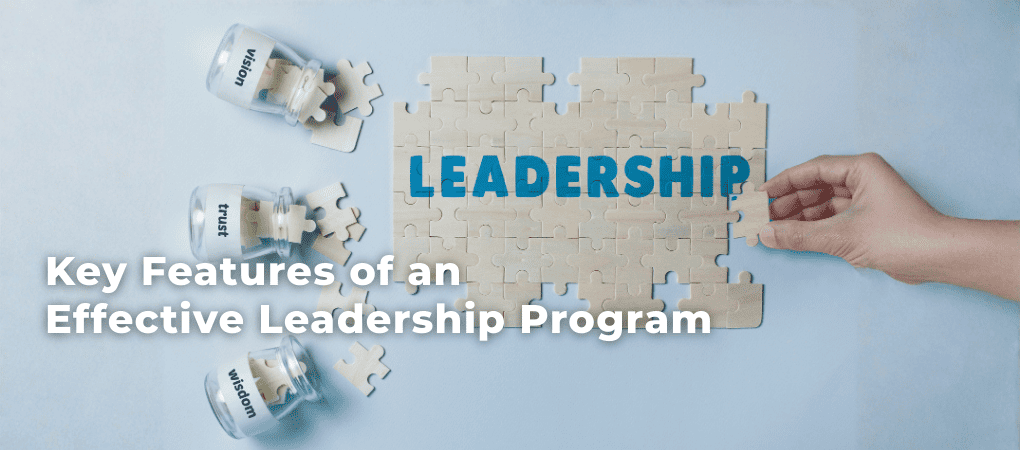
An effective programme must do more than share ideas. It must ignite leaders with skills and results that match today’s world. Companies should focus on several defining features when they judge their choices.
1. HRDF Claimable
Malaysia’s Human Resource Development Fund (HRDF) supports approved courses. When programmes qualify, companies reclaim part of their investment. This feature lightens financial strain while encouraging firms to commit to structured learning.
2. Industry-Relevant Content
Leadership skills only thrive when tied to context. Training must connect with industry challenges. Strong programmes address issues such as customer shifts, regulation, or market changes. This ensures that leaders walk away ready to use what they have learned.
Effective programmes often reveal industry focus in three practical ways:
- They reflect current market realities.
- They tackle sector-specific problems.
- They prepare leaders for daily work demands.
These elements turn training into useful, long-lasting development.
3. Experiential Learning
The best programmes energise leaders through practice, not just theory. Role plays, simulations, and group work let people practice skills in safe environments. This design boosts confidence and anchors knowledge in real action.
Companies that embrace experiential design often notice three benefits:
- Participants stay engaged during sessions.
- Leaders practice in situations that feel real.
- Knowledge sticks because learning feels relevant.
By combining HRDF claimable support, industry focus, and experiential design, companies unlock the strongest impact from training.
Common Pitfalls When Choosing a Leadership Program
Companies sometimes rush into training without careful thought. These sparks wasted investment and disappointment. By spotting common pitfalls, businesses dodge mistakes and secure stronger results.
1. Generic Content
Generic training reuses broad topics that fail to touch real company needs. Leaders may collect information, but they cannot apply it. Training should align with company goals; otherwise, it will be ineffective and serve little purpose.
2. No Measurable ROI
Return on investment (ROI) shows value. Some providers deliver courses without a way to track outcomes. Companies must measure changes in productivity, retention, or teamwork. Without ROI, firms question the worth of development and lose trust in training.
3. Poor Engagement
Some programmes collapse because they bore participants. Endless slides and lecture-heavy sessions drain attention. When leaders tune out, they fail to absorb skills. Companies must demand formats that invite interaction and spark focus.
Firms that dodge these pitfalls often rely on three steps:
- They seek providers with tailored content.
- They insist on clear ROI tracking.
- They choose programmes with proven engagement.
This approach ensures that training investments bear visible fruit.
A Checklist for Malaysian Companies to Evaluate Providers
Evaluating training providers calls for structure. A checklist helps companies compare fairly and choose the one that fits their vision.
The table below outlines the main evaluation points for Malaysian companies seeking the right provider:
| Evaluation Area | Key Question | Why It Matters |
|---|---|---|
| HRDF Certification | Is the programme HRDF claimable? | Cuts cost and builds sustainability |
| Content Relevance | Does the content match industry needs? | Ensures leaders apply learning at work |
| Delivery Method | Does the provider use experiential methods? | Strengthens retention and engagement |
| ROI Measurement | Can outcomes be tracked after training? | Proves value to the organisation |
| Customisation | Will the programme reflect company culture? | Ensures long-term relevance |
Companies that apply this checklist usually gain three advantages:
- They filter out providers with weak content.
- They identify programmes tied directly to their sector.
- They confirm that training produces visible, lasting results.
By following these steps, firms protect their investments and prepare leaders with greater certainty.
How does Shretail Academy address these Challenges?
Many providers promise training, but not all deliver courses that solve the real struggles of Malaysian firms. Shretail Academy shapes its leadership program to strike directly at these pain points.
First, every course aligns with HRDF rules, helping companies reclaim part of their investment. Second, the content mirrors industry demands, so participants learn skills they can use right away. Third, the Academy uses experiential design that brings training alive. Leaders practise, debate, and build confidence through interactive work.

Shretail Academy also tracks outcomes to prove ROI. Companies see gains in teamwork, communication, and performance. The Academy tailors each course to match company culture and goals, which strengthens relevance and long-term impact. By solving these issues, Shretail Academy equips Malaysian firms with leaders who can steer growth and maintain an edge in the market.
Conclusion
Choosing the right training path demands more than glancing at brochures or chasing the cheapest option. It calls for careful thought about content, delivery, and results. Companies that weigh their options find programmes that truly align with their goals. They also avoid mistakes that drain resources and leave leadership gaps unfilled.
An effective leadership program blends HRDF support, industry-relevant design, and experiential practice. It also includes ROI tracking and adapts to company culture. Providers that deliver these features act as true partners for growth.
Shretail Academy matches these standards with care. Its courses equip leaders with tools to perform today and prepare for tomorrow. Companies that choose wisely not only train managers but also forge future-ready leaders. By doing so, they carve stronger organisations that propel Malaysia’s business growth for years to come.
80 total views, 8 views today

Sorry, the comment form is closed at this time.